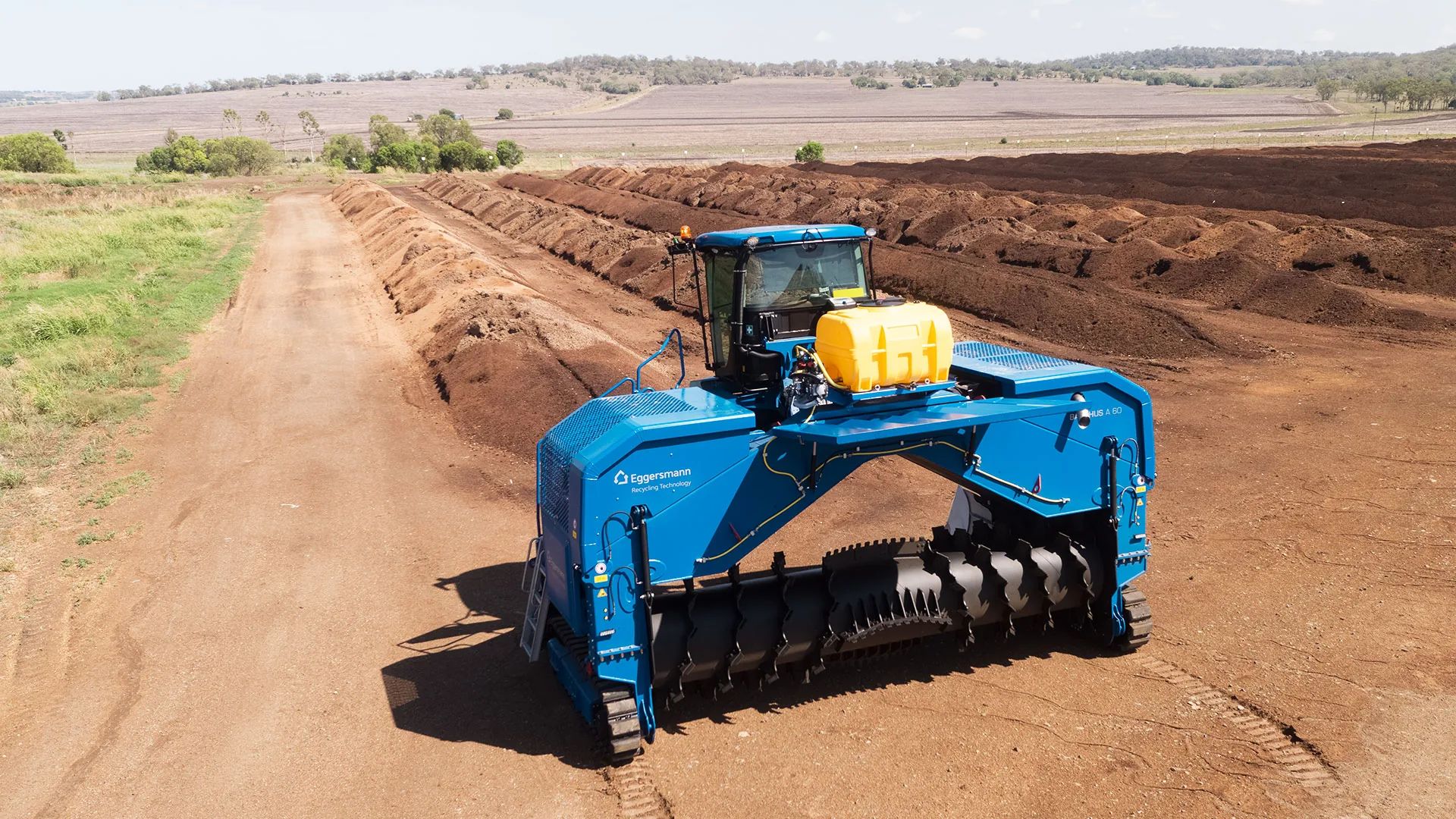
As Australia pushes toward ambitious 2030 FOGO diversion targets, commercial composting facilities face a dual challenge: increasing throughput efficiency while reducing operational carbon footprints. The newly unveiled BACKHUS ALPHA 55 from Eggersmann marks a decisive shift in how modern composting operations navigate these pressures.
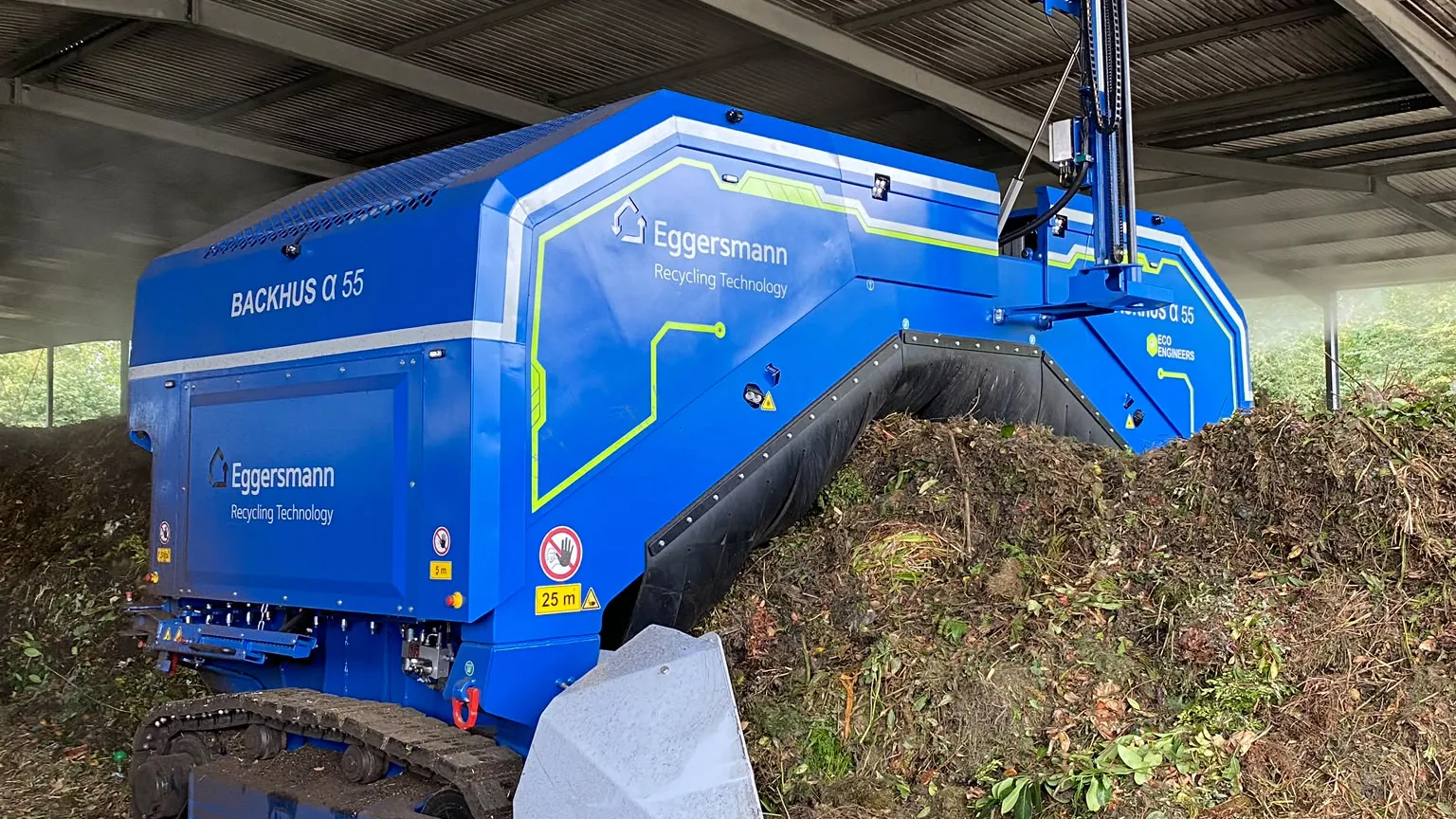
Unveiled ahead of IFAT Munich during the Eggersmann Dealer Days Conference, the BACKHUS ALPHA 55 is the market’s first fully automated, 100% electric windrow turner, powered by an integrated high-voltage battery system. By combining driverless autonomy with zero-emissions propulsion, it redefines the benchmark for large-scale windrow composting.
Moving past diesel reliance
For decades, windrow turning has relied on heavy diesel machinery, requiring ever-increasing fuel expenditure, engine maintenance and emissions. The high-voltage battery architecture of the ALPHA 55 eliminates direct fuel reliance without sacrificing the torque and mass required to process dense FOGO windrows.
Electric operation also significantly reduces noise levels, making it ideal for facilities operating near residential boundaries or within enclosed halls.
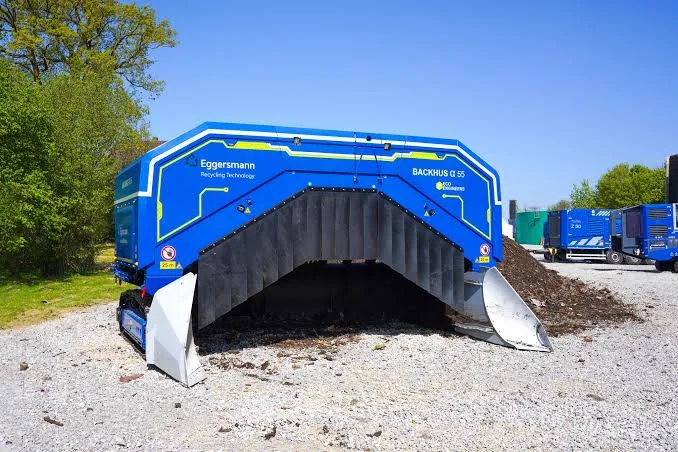
The operational power of precision autonomy
Equipment automation is no longer just a novelty; it is a vital tool for risk reduction and process optimisation. The ALPHA 55 operates on intelligent self-driving algorithms that maintain precise travel paths and optimal pile geometry.
Automated wayfinding delivers three major operational benefits:
- Consistent aeration: removes human variability in speed, ensuring uniform oxygen distribution and accelerating composting cycles. Real-time feedstock characterisation is a game-changer.
- Lower labour reliance: frees key personnel to handle high-value site management tasks rather than continuous machine operation.
- Equipment preservation: autonomous load-sensing prevents machine overload, extending component lifespans and lowering maintenance downtime.
Looking ahead
The rollout of autonomous windrow turners signals a maturing industry where sustainability and operational precision align. For forward-thinking processors, adopting zero-emission automated technology is not just about meeting current environmental compliance; it’s about building a scalable, future-proof processing operation.